by Samira Houdiri
Samira Houdiri wanted comfortable shoes, fried food, and ten minutes where nobody needed her to be charming. She got churros, a handsome stranger, and a sunrise that made going home considerably more complicated.
I love people. That's probably why I need breaks from them too.
By the end of a Friday shift, I had usually heard three break-up stories, two arguments about football, at least one person asking why their cocktail cost more than their flight, and several questions about where to find somewhere “authentic” in Barcelona while standing in the middle of the Gothic Quarter.
I liked the noise, the movement, the little theatre of it all. I liked making someone laugh when they had arrived determined not to. I liked the moment a cocktail landed in front of a customer and their whole face changed. I even liked flirting, provided everyone remembered it was a conversation and not a contract.
I simply did not want to do any of it forever.
By half past three that morning, I wanted comfortable shoes, something fried, and ten minutes in which nobody needed me to be charming. Preferably in that order.
Lucía caught me polishing a glass we had already polished twice. She was counting the till with the expression of a woman who had personally been betrayed by mathematics.
“You’re doing it again,” she said.
“Doing what?”
“Pretending the glass is the reason you haven’t left.”
I held it up to the light. “It has an attitude.”
“It is a glass.”
“You don’t know what it says about you when you turn your back.”
She took it from my hand and placed it on the shelf. “Go home, Samira.”
“I am going home.”
“You’ve been going home for fifteen minutes.”
She knew me too well. I always needed a few minutes after closing, a little pause between the woman behind the bar and the one who walked back through the city. The bartender smiled before she felt like smiling, remembered names, softened bad news, and could tell from the angle of a man’s shoulders whether he wanted another drink or an audience. She was still me. She was simply me with the volume turned up and the lights arranged properly.
The other version wore trainers and did not care whether anyone found her interesting.
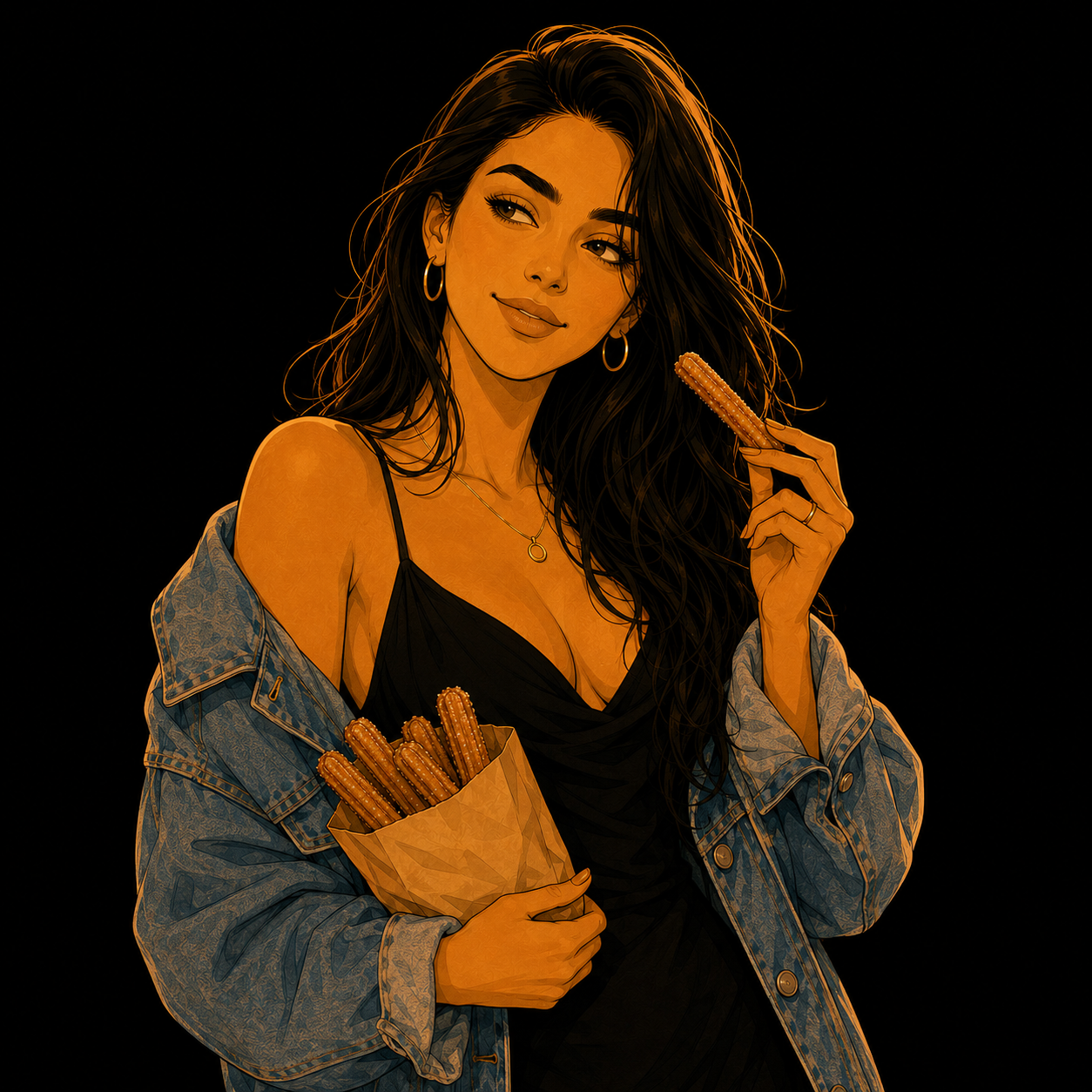
I said goodnight to Lucía and went into the staff room, where the mirror above the sink gave everybody the sort of honesty usually reserved for family. My lipstick had mostly survived, although one corner had given up. The eyeliner looked perfect. Honestly, it deserved a raise. My curls had started the evening loose and deliberate and ended it looking as though they had been through a minor emotional crisis.
I took off my hoops, wiped away the lipstick, and twisted my hair into a messy bun. Then I changed out of my heels and into the white trainers I kept beneath my locker. The relief moved through my whole body.
I pulled an oversized denim jacket over my black dress and stepped outside.
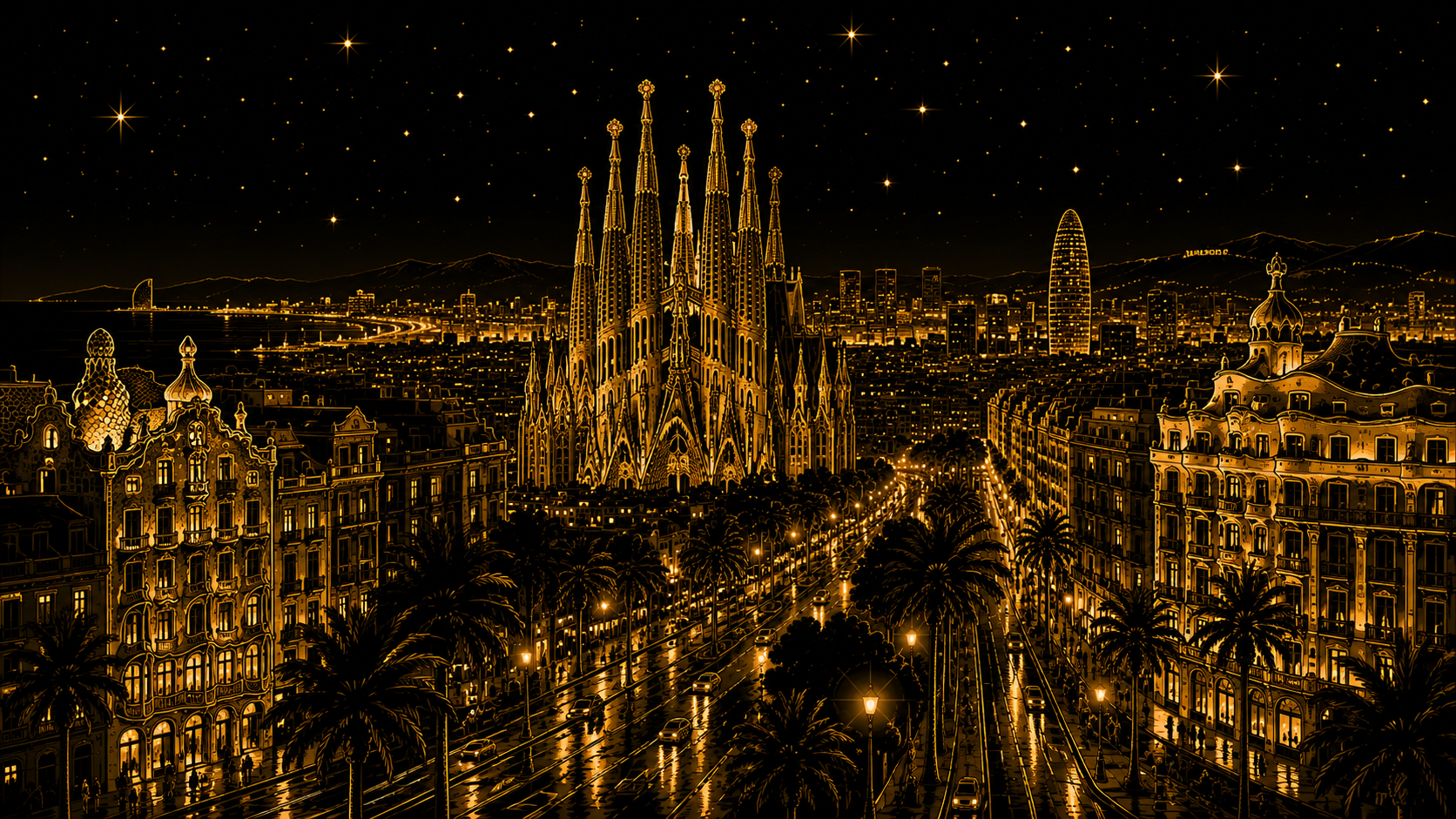
Barcelona was changing shifts.
The city was not quiet yet. People like to describe four in the morning as though every street becomes a private dream, but Barcelona has never been that cooperative. A group of girls crossed the road carrying their heels, one of them laughing so hard she nearly walked into a bollard. Two men argued outside a kebab shop while one of them held the phone he claimed to have lost. A taxi waited at the corner, its driver drinking coffee with the exhausted patience of someone who had heard every possible lie.
Further down the street, the cleaners had begun washing the cobblestones. Water ran through the gaps between the stones, carrying cigarette ends, glitter, lime wedges and whatever remained of people’s confidence after closing time. Delivery vans were appearing too, squeezing through medieval lanes that had clearly not been designed with reversing alarms in mind.
Barcelona changed perfume every few hours. Around midnight, it smelled of vanilla, cigarette smoke and expensive aftershave. By four, damp stone and detergent had begun to take over, with hot oil and bread drifting from places preparing for morning. That was my favourite version of the city. It belonged to the people starting work and the people finishing it, all of us briefly sharing the same hidden hour.
I headed towards Miguel’s xurreria.
I did not go too often, which suited me. Routine makes me nervous once it begins expecting things. I visited after the longer shifts, when going straight home felt too sudden and I needed a little space before Nala launched herself at my ankles as though I had abandoned her for several years instead of seven hours.
Miguel’s stall sat beneath a striped awning on a street corner, all steel counter, yellow light and hot oil. There were no tables and nothing designed to be photographed. It existed to sell churros, which I respected. Some places become popular and immediately start serving food on tiny wooden boards. Miguel would rather close.
He saw me approaching and smiled. “There she is.”
“Here I am.”
Miguel laughed with his whole face. He was one of those men who looked as though he had been fifty-eight since birth. I had no idea how old he really was, and asking now would have felt like admitting I had been wondering.
“Long night?” he asked as he pressed dough into the oil.
“I made enough espresso martinis to alter the nervous system of northern Europe.”
“You counted?”
“No, but it feels emotionally accurate.”
He turned the churros with quick, practised movements. Watching someone else make food after a shift was strangely comforting. Nobody wanted a recommendation. Nobody was asking whether the chocolate was sweet but not too sweet, rich but not heavy, traditional but somehow exciting. Miguel made what he made, and people either understood or did not deserve it.
“No dancing tonight?” he asked.
“I taught yesterday.”
He scooped the churros from the oil, dusted them with sugar and folded them into a paper bag. Then he poured thick hot chocolate into a takeaway cup and pushed both towards me.
“Careful.”
“I know.”
“You burned your tongue last time.”
The small bell attached to the awning moved as someone stepped up beside me.
“Morning, Uncle.”
I looked over.
He was tall. His hair was a little messy, and he wore a navy coat over a pale open-collared shirt and dark trousers. He was handsome in an unarranged kind of way. His face looked tired before anything else, the sort of tiredness that sat in the shoulders and made every movement economical.
Miguel’s expression softened. “Finished?”
“Finally.”
“Busy?”
He rubbed the back of his neck. “Very.”
Then he asked how “Aunt Nuria” was doing. Miguel told him she was sleeping better. The man nodded, and something in his face loosened for a second before he tucked it away again.
The exchange lasted less than a minute, but I noticed it. People reveal themselves in the questions they ask when they are too tired to perform.
Miguel glanced between us. “You two haven’t met.”
Of course. Handsome men are never random. They are always somebody’s nephew.
“This is Mateo,” he said. “And this is Samira.”
Mateo held out his hand. His grip was warm and brief, which I appreciated. Some men treat handshakes like competitive sport.
“So you’re Samira,” he said.
I looked at Miguel. “You’ve been discussing me.”
“I mention people.”
Mateo smiled. “He said you were impossible.”
Miguel sighed. “I said entertaining.”
I folded my arms. “I liked you until about six seconds ago,” I said to Mateo.
“I’m disappointed.”
“You’ll recover.”
“I am a doctor. Recovery can be a challenge.”
“You're a doctor. You have no excuse.”
Miguel rolled his eyes. “You sound as though you’ve known each other for years.”
“I certainly hope not,” I said. “He’s already taking sides.”
Mateo looked at Miguel. “I thought I was taking yours.”
“Then that's even worse,” I told him.
He laughed, and I did too. A real laugh this time, one that came out before I could arrange it. I had spent hours laughing for customers, and there is a difference. Professional laughter is bright and well timed. This one caught me off guard.
Miguel handed me the bag and the cup. “Go before you both become unbearable.”
“We’re already there,” Mateo said.
“At least he is honest,” I told Miguel.
I thanked him, asked him to give Nuria my best, and started down the street. Mateo stepped away from the stall at the same time. For the first half-minute, neither of us acknowledged that we were walking together. We crossed one street, then another, while the conversation from the xurreria continued as though it had simply come along with us.
“I think we skipped something,” he said.
“What?”
“The awkward part where strangers decide whether they are still talking.”
“I don’t think conversations work in reverse.”
“We could introduce ourselves again.”
“I’m Samira.”
“And I’m Mateo.”
I smiled. “Now what?”
“We keep walking.”
A delivery van began reversing into a lane ahead of us, beeping with the confidence of something much larger than it was. We moved aside, and Mateo placed a hand lightly at my elbow to guide me around the back of it. He let go immediately, but I noticed the gesture.
“What kind of doctor are you?” I asked once the van had passed.
“I work in the emergency department.”
“That explains your face.”
He looked over. “What is wrong with my face?”
“It says you’ve spent the night watching people make terrible decisions.”
“I have.”
“I’m a bartender. We are practically colleagues.”
“Are we?”
“We both tell strangers to stop doing things that will hurt them.”
“Do yours listen?”
“Never.”
“Mine either.”
The conversation found its rhythm after that. We traded stories about customers and patients without sharing anything that belonged to someone else. He told me about a man who had tried to remove his own cast with kitchen scissors. I told him about a woman who had sent back a martini because it tasted too much like alcohol. Neither of us tried to sound clever. We were simply tired enough to be ourselves.
At some point, we stopped walking towards anywhere in particular. I showed him a carved face above an old doorway, its mouth turned down in permanent disappointment.
“I call him the landlord,” I said.
Mateo looked up. “Why?”
“He looks as though everyone owes him money.”
“I have walked this street hundreds of times and never seen that.”
I pointed out a courtyard tucked behind an arch, a tiny saint set into the wall, and red flowers spilling over a balcony narrow enough to make the whole arrangement look dangerous. Mateo slowed down and studied them as though the city had quietly rearranged itself while he was not paying attention.
“I suppose I don’t look,” he admitted.
“I suspected as much.”
“You're enjoying this, aren't you?”
“Very much.”
I opened the paper bag and offered him a churro. He took one after a polite hesitation that lasted just long enough to prove he had manners. Five minutes later, while I was explaining why pigeons in Plaça Reial were more aggressive than pigeons anywhere else in Europe, he reached into the bag and took another without asking.
I looked at his hand, then at him.
He kept chewing. “What?”
“That was my breakfast,” I laughed.
“I assumed it was an ongoing arrangement.”
“Doctors are shameless.”
“We are efficient.”
I folded the bag closed, and he smiled at the small victory as though he had earned it. We kept walking through the Gothic Quarter while the city thinned around us. The last groups from the bars disappeared into taxis. Shutters began to rise. Somewhere nearby, bread was being unloaded from a van, and the sky above the rooftops had started to lose its darkness.
I had stopped thinking about when the walk would end. The strange thing was that neither of us mentioned going home. I only realised it when I opened the bag again and let Mateo steal another churro.
We had drifted through enough streets that I had lost all sense of direction, but I wasn’t lost. There’s a difference. Lost feels anxious. This felt borrowed, as though somebody had quietly given us an extra hour that didn’t belong to the rest of the city.
“I guess I’ve never really seen this part of Barcelona,” Mateo said.
“You’ve seen it,” I replied. “You just haven’t been awake for it.”
He smiled, but instead of answering, he looked around. Properly looked. At the balconies. At the crooked windows. At the little patches of ivy forcing their way between old stones.
I liked that.
People think showing someone a city means taking them to famous places. I think it’s teaching them where to look.
The smell of fresh bread reached us again.
It reminded me so suddenly of Casablanca that I stopped walking.
“My grandmother used to send me to buy bread every morning,” I said. “I was convinced she only did it because she knew I’d eat half the loaf before I got home.”
Mateo laughed.
“Did she?”
“Oh, she absolutely knew. She’d still act surprised every time.”
“Spanish mothers do something similar.”
“They pretend not to notice?”
“They notice everything. They just wait until dinner to mention it.”
I nodded thoughtfully. “That feels very Mediterranean.”
For the next few streets we compared families instead of jobs. Mothers who believed food solved almost every problem. Grandmothers who somehow cooked for twenty people regardless of how many had actually arrived. Relatives who greeted you by commenting on your weight before asking how you were.
I realised I was smiling almost constantly. There was something deeply comforting about talking to someone who understood the rhythm of the life I lived without asking me to explain it.
The sky continued to lighten.
Most people think sunrise belongs to early risers. They’re wrong. It belongs to people finishing.
“I suppose we should both be asleep,” I said.
Mateo laughed quietly. “I was thinking the same.”
“Normal people are probably making coffee.”
“While we’re having breakfast before bed.”
There was a comfortable pause between us.
“Sometimes,” Mateo said eventually, “after difficult shifts, I sit on a bench outside my building before I go inside.”
He said it so casually I almost missed it.
“I don’t even know why,” he continued. “I just need the day to catch up with me.”
I looked down at the paper bag in my hand.
“I stop at Miguel’s for the same reason.”
He glanced over.
“I thought you just liked churros.”
“I do.”
“But?”
“I think I need somewhere between work and home where nobody expects anything from me.”
He nodded once. No advice, or sympathy. Just an understanding that rested gently between us.
It felt surprisingly rare.
Without noticing, we’d reached Plaça Nova.
The square was almost empty. The cathedral stood quietly in the soft morning light, its stone changing colour as the sun climbed a little higher. A delivery driver wheeled crates towards a nearby café. Someone crossed the square with a newspaper tucked beneath one arm.
I pointed towards an empty bench.
“Five minutes?”
“I can manage five.”
I sat first, stretching out my legs. The bench was still cold from the night, but neither of us seemed to mind.
It struck me then that I hadn’t really looked at him since we’d left Miguel’s.
Not properly.
He looked younger sitting still. Less like a doctor. More like someone who had forgotten to sleep after finishing a long conversation. There was a faint mark on his wrist where his watch had been, and every so often he rubbed the bridge of his nose without seeming to notice.
He caught me looking.
“What?”
“I’m deciding whether you’re always this tired.”
“I hope not.”
“I think it suits you.”
“I’m not sure that’s a compliment.”
“It wasn’t entirely.”
He laughed.
I noticed something else then. He smiled before he laughed. Just slightly, as though happiness arrived a fraction of a second earlier than the sound.
I looked into the paper bag.
One churro.
“Well,” I said. “This is awkward.”
Mateo peered inside. “I appear to have caused this.”
“You absolutely caused this.”
He broke the churro in half and we shared it in companionable silence.
“I’ve seen you before,” Mateo said, after a minute.
“At Miguel’s?”
He nodded.
“A few times.”
“So why didn’t you say hello?”
He thought about it. “I wasn’t sure you’d want to talk.”
I smiled.
“Well, now you know.”
Morning had arrived properly now as people crossed the square. The little world we’d accidentally borrowed was beginning to disappear.
I looked at Mateo. Then at the cathedral. Then back at him.
If I stood up now, I knew exactly what would happen. I’d walk home. Sleep until lunchtime. Teach a dance class that evening, go back to work, and every time I passed Miguel’s, I’d wonder what might have happened if I’d been just a little braver.
Wondering seemed much more frightening than knowing. So I leaned across the bench and kissed him.
It lasted only a moment, but when I pulled away, neither of us hurried to explain it.
Mateo smiled first.
“So…”
“So,” I replied.
“I don’t think conversations work in reverse.”
I laughed. “No. They can surprise you, though.”
A church bell rang somewhere behind us. The city had fully reclaimed the morning.
“I should probably go home,” I said.
“You probably should.”
“So should you.”
“I know.”
There were no promises. No questions about phone numbers. No awkward plans for next week. Just a smile that somehow felt enough.
Halfway across the square I looked back. Mateo was still sitting on the bench, watching Barcelona wake up.
He noticed me looking.
And he smiled.